Use this bench press 1RM calculator to estimate your one-rep max from a working set, then turn that number into practical training weights. Enter the weight and reps you completed with clean form, choose your units, and use the percentage chart to plan your next session.
Bench Press 1RM Calculator
Use a challenging set of 1 to 30 reps. The result is an estimate, not a reason to test a max without a spotter and sound technique.
How to Use Your Bench Press 1RM
An estimated one-rep max gives you a starting point for planned training. If you press 185 pounds for 5 clean reps, the calculator estimates a 1RM near 216 pounds. That estimate helps you choose a working weight without turning every training block into a max-out day.
Use the calculator after a set that was hard but technically clean. A spotter touching the bar, a shortened range of motion, or a big hip lift makes the result less useful because the input was not a repeatable bench press rep.
Bench Press Training Percentages
| Percentage |
Typical use |
Example goal |
| 60% to 70% |
Technique and volume |
Multiple controlled sets of 6 to 10 reps |
| 70% to 80% |
Strength-building volume |
3 to 5 sets of 4 to 8 reps |
| 80% to 90% |
Heavy strength work |
3 to 6 sets of 2 to 5 reps |
| 90% to 95% |
Peaking practice |
Singles or doubles with reliable technique |
These are training guides, not guarantees. If your bar speed or position breaks down, reduce the load and keep the quality rep. Your estimated 1RM should guide the session, not overrule good judgment.
Simple Bench Press Warm-Up
- Start with the empty bar for 10 to 15 smooth reps.
- Take two to three warm-up sets while gradually adding weight and reducing reps.
- Once the bar reaches about 70% of your working weight, use smaller jumps and singles or doubles.
- Rest long enough to feel ready, then start your first work set with the same setup every time.
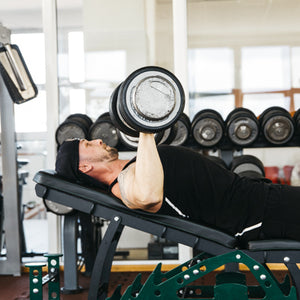
Use the same setup on warm-ups and work sets: eyes under the bar, feet planted, upper back tight, and a controlled touch point. For the actual movement, review the barbell bench press guide.
FAQ
How accurate is a bench press 1RM calculator?
A calculator gives an estimate based on the quality of your set. It is usually most useful when you use a challenging set of 1 to 10 reps with consistent form.
Which 1RM formula does this calculator use?
This calculator uses the Epley equation: weight multiplied by one plus reps divided by 30. It is a practical way to turn a working set into a planning number.
Can you use kilograms?
Yes. Select kilograms before calculating and the percentage chart will return training weights rounded to the nearest 0.5 kg.
Should you test your actual one-rep max?
Only test an actual max when you have solid technique, appropriate equipment, and a competent spotter or safeties. Most lifters can plan productive training from an estimate.
How often should you recalculate your bench 1RM?
Recalculate after a meaningful performance change, such as adding reps at a working weight or completing a new clean top set. You do not need to recalculate after every workout.
What should you do if percentage work feels too heavy?
Lower the training weight and use the number that matches your current performance. The goal is repeatable quality reps, not forcing a percentage that no longer reflects your readiness.
Build the Rest of Your Training Plan
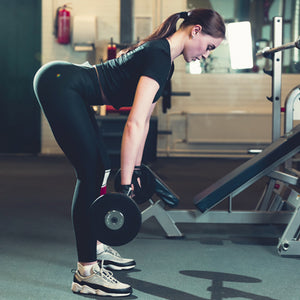
Your bench press is stronger when your upper back and legs do their share. Add controlled pulling work such as the bent-over dumbbell row and build leg strength with the barbell front squat.






Comments
Leave a comment